Every athlete knows the feeling. You’re standing at the starting line. Waiting for the whistle. Walking onto the field. Stepping up to take the penalty shot. Preparing for your routine.
You’ve trained for this. You know what to do.
But suddenly your heart starts racing. Your stomach flips. Your breathing feels different. Your mind fills with thoughts like, “What if I mess up? What if I let my team down?”
If this sounds familiar, you’re not alone. Performance anxiety affects athletes at every level, from kids in community sports to Olympians. Feeling anxious doesn’t mean you’re not ready — in many cases, it means the opposite.
Why performance anxiety happens
In high-pressure moments, your brain scans for anything that could threaten your success, and your body responds with a stress response: faster heartbeat, tense muscles, butterflies. The catch is your brain can’t always tell the difference between real danger and performance pressure — a championship game can trigger the same physical response as an actual threat, even when you’re well prepared.
A little anxiety can actually help
The goal isn’t to eliminate nerves — it’s to find the middle ground. Too relaxed, and you lack focus. Too anxious, and you can’t think clearly or execute practiced skills. Those pre-game butterflies are often just your body preparing to compete.
When your mind becomes your biggest opponent
Performance anxiety often grows when physical symptoms are paired with unhelpful thoughts, such as:
· “I’m going to mess this up.”
· “Everyone is watching me.”
· “If I fail, I’ll disappoint my coach.”
· “What if I choke again?”
These thoughts can create a cycle. Focusing on what could go wrong increases anxiety, which makes your body’s stress response even stronger. Over time, some athletes may even begin feeling anxious during practice as they start associating their sport with anxiety instead of enjoyment.
Train your mind like you train your body
Mental preparation deserves just as much attention as physical preparation.
Just as you practice your skills, you can practice how you’ll respond mentally under pressure.
Visualize success. Picture yourself moving confidently, executing skills smoothly, and finishing strong. The more your brain rehearses success, the more familiar it becomes.
Notice your self-talk. Swap “I’m going to choke” for “I’ve prepared for this” or “One play at a time.” This isn’t about expecting perfection — it’s about choosing thoughts that help you perform.
Manage your body’s response. Slow, deliberate breathing before competition helps bring you back into your optimal zone. A consistent pre-performance routine can also signal to your brain that you’re ready.
Focus on what you can control — your preparation, effort, attitude, recovery, and focus — rather than referee calls, opponents, weather, or outcomes. Energy spent worrying about the uncontrollable is energy taken from what actually improves performance.
Don’t neglect the basics. Sleep, nutrition, activity, and recovery all support both performance and your ability to manage stress — even when it’s tempting to sacrifice them under pressure.
Lean on your support system. You don’t have to manage performance anxiety alone. Reach out to coaches, teammates, friends, or family — the ones who can remind you of your preparation and help you keep setbacks in perspective.
You don’t have to eliminate anxiety
Many athletes spend years trying to get rid of performance anxiety completely. But that may not be realistic—or even necessary.
Even experienced athletes continue to feel nervous before important competitions. The difference is that they learn how to work with those feelings instead of fighting them.
With practice, the goal isn’t to stop feeling nervous. It’s to recognize those feelings, understand what’s happening in your mind and body, and use that energy to help you perform at your best.
Performance anxiety is just one way our mental health can affect how we show up in everyday life. If you’ve noticed that anxiety, stress, low mood, or other emotional challenges are becoming harder to manage—not just in sports, but at work, school, or in your relationships—it may be worth taking a moment to check in with yourself.
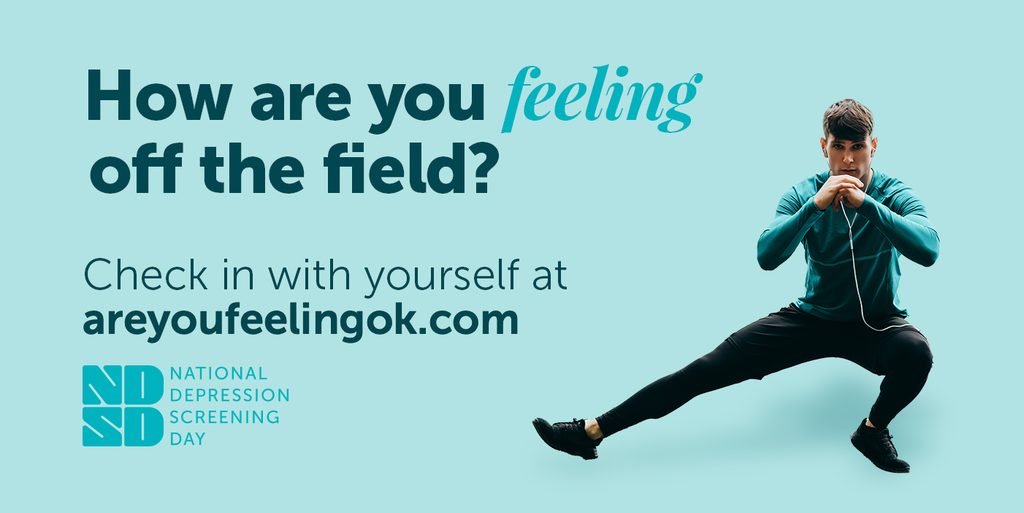
Each October, Calgary Counselling Centre and Counselling Alberta offer a free, anonymous online screening to check in with your mental health. The quiz can help you better understand how you’ve been feeling and connect you with helpful resources.
From October 5–11, you can take the screening at areyoufeelingok.com. Sometimes, the first step toward feeling better is simply checking in with yourself.